
One of my English class assignments was to report on someone involved in cancel culture, either as an instigator or a victim. The conditions were that the person needed to be famous and alive.
I immediately thought of Anita Bryant. If you are in a younger generation than mine, you probably will ask, “Who?” If you are a member of my generation or interested in the history of pop culture or gay political movements, then your reaction will be “Oh, her!!!”
When I thought of using Bryant as my essay subject, I thought it was a whimsical notion that would go nowhere. First, the obvious intent of the assignment was to focus on someone involved in our modern version of cancel culture we see practiced every day on the Internet. Second, there was a requirement that the subject still be alive. Surely, Anita Bryant had passed this mortal coil by now.
Still, I mentioned all this to my professor. The next class, she told me, “She’s alive. Go for it.”
I really liked this professor. She was cool.
Sure enough, I looked Bryant up and to my astonishment, she was still breathing at the age of 84. I commenced to write the following essay.
What ingredients do you need for cancel culture? The Internet, social media, home computers, smartphones, iPads, a fast connection? It would seem so in our modern times. However, consider this definition of cancel culture, according to New York Times columnist Ross Douthat:
“Cancellation, properly understood, refers to an attack on someone’s employment and reputation by a determined collective of critics, based on an opinion or an action that is alleged to be disgraceful and disqualifying” (Douthat).
Douthat doesn’t mention the Internet or even a USB key. If this is an acceptable description of cancel culture, is there a pre-Internet case that qualifies as a cancel culture event? I believe there is.
The subject of this essay was a popular entertainer who championed a virulent homophobic campaign. She was both a victimizer and a victim of the gay rights movement.
Her name was Anita Bryant.
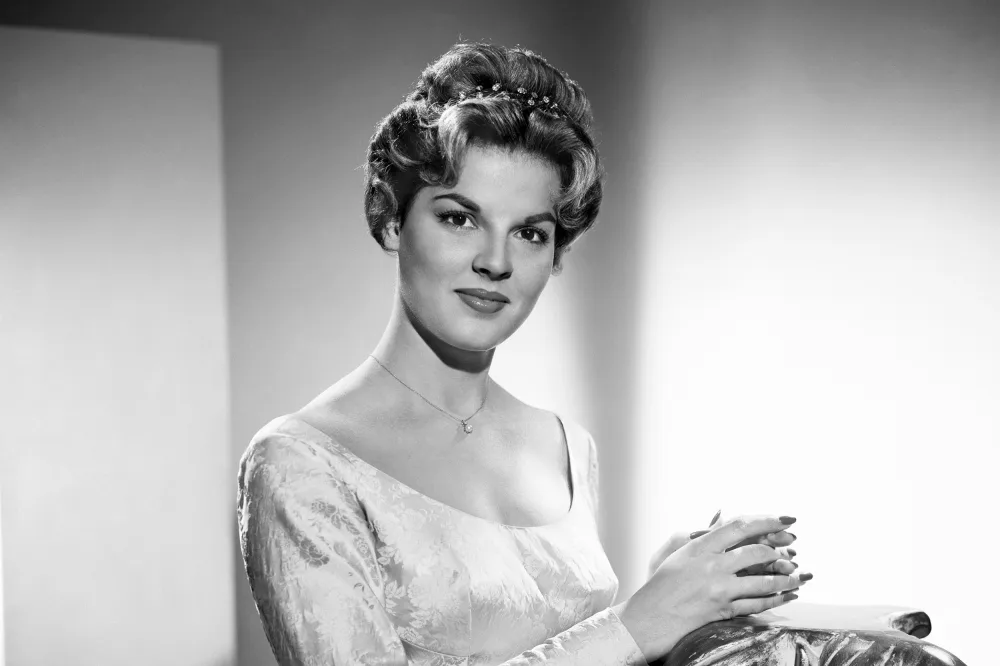
I am bending the rules a bit as Anita Bryant faded from the public eye decades ago. But, before the Internet and social media were a thing, she kickstarted the concept of cancel culture as we know it today. Bryant may no longer be in the limelight, but many adherents to her views continue to use the tactics she helped promote.
Anita Bryant was born in 1940 to a conservative Christian family in Barnsdall, Oklahoma. Even at an early age, Anita had good looks, a good singing voice, and a natural stage presence. She parlayed her talents into a successful recording career. Bryant’s venues included the White House, the conventions for both the Democratic and the Republican parties, and even Lyndon Johnson’s funeral (Medley).
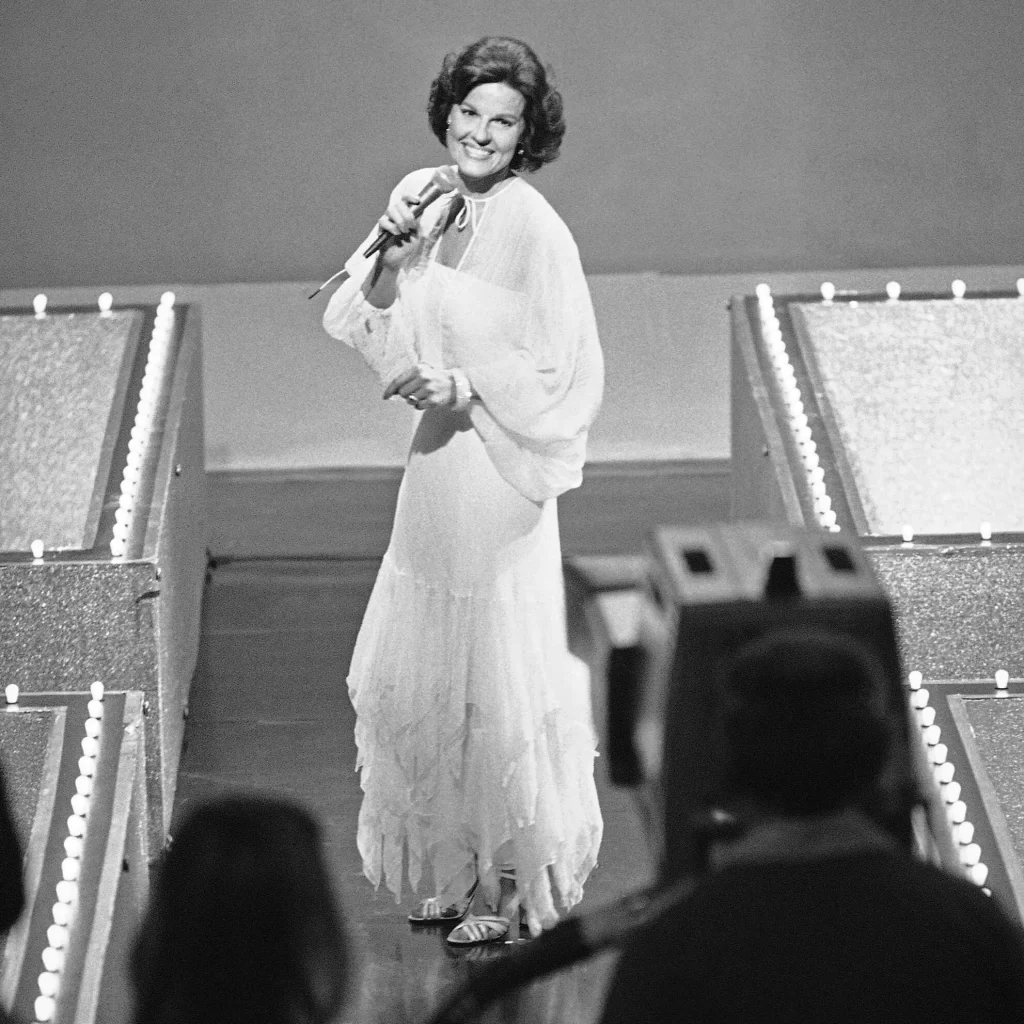
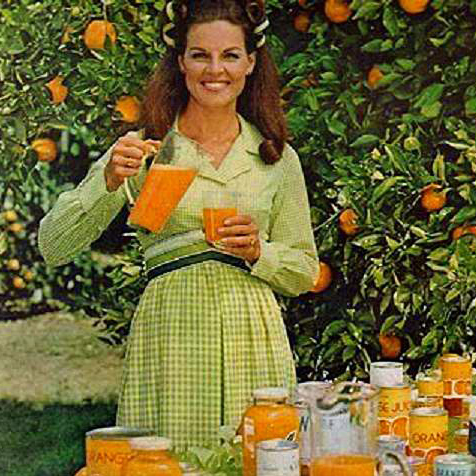
By the late 1960s, Bryant’s middle-of-the-road pop style of music started to lose ground to the rise of rock and roll. To make up for her flagging record sales, she shifted her focus to commercial endorsements for Coca-Cola and the Florida orange juice industry. This was a very lucrative move. Bryant’s good looks and clean-cut Christian persona made her an ideal spokeswoman. Her orange juice endorsements alone reportedly made her $100,000 annually, approximately $520,000 in 2024, as adjusted for inflation (Buckwald).
While in Florida, Bryant struck up a friendship with Ruth Shack, the wife of Bryant’s theatrical agent.
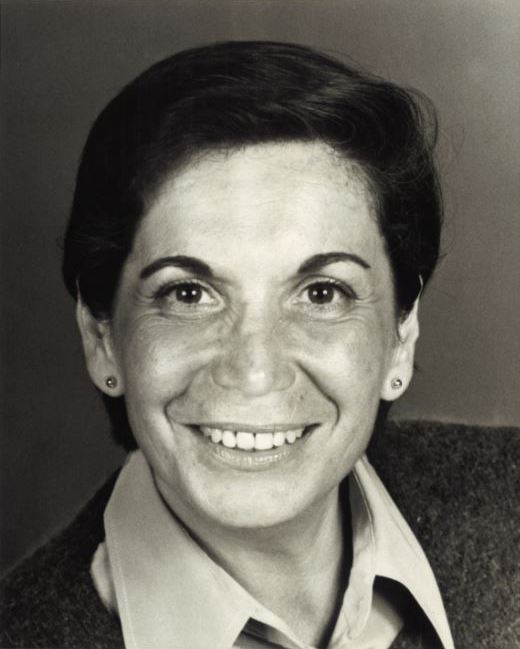
It was a friendship doomed to break apart in a very public manner (Slate).
In late 1976, Shack was elected to the Miami-Dade County Commission. Soon after she took office, several gay activists approached her. The county already had ordinances prohibiting discrimination based on race, religion, or sex. The activists also wanted to prohibit discrimination based on sexual orientation (Slate).
Shack readily agreed. In a 2021 Slate interview, she stated: “I sponsored the amendment because, on television at night, you would see paddy wagons pull up to bars, hauling out men in business suits. That made me nauseous.”
A similar anti-discrimination ordinance was passed in Seattle, Washington, the previous year with minimal drama (Slate). It wouldn’t play out that way in Miami.
Most commission meetings were staid routine affairs. The county commission meeting held on January 18, 1977, was not. Church groups came from all over the state. They mobbed the venue. Religious representatives spoke against the ordinance. They emoted that their children needed to be protected from homosexuals (Slate). They contended that because gay people could not reproduce, homosexuals had to convert children into being gay to maintain their numbers (Engenious).
Yes, that was a thing.
Most speakers were not well-known. The notable exception was the famous 36-year-old entertainer Anita Bryant.
According to Bryant, she and other Christians were the ones who were suffering, not gay people. “I believe […] that [this ordinance] would violate my rights and the rights of all the decent and morally upstanding citizens, regardless of their race or religion” (Slate).
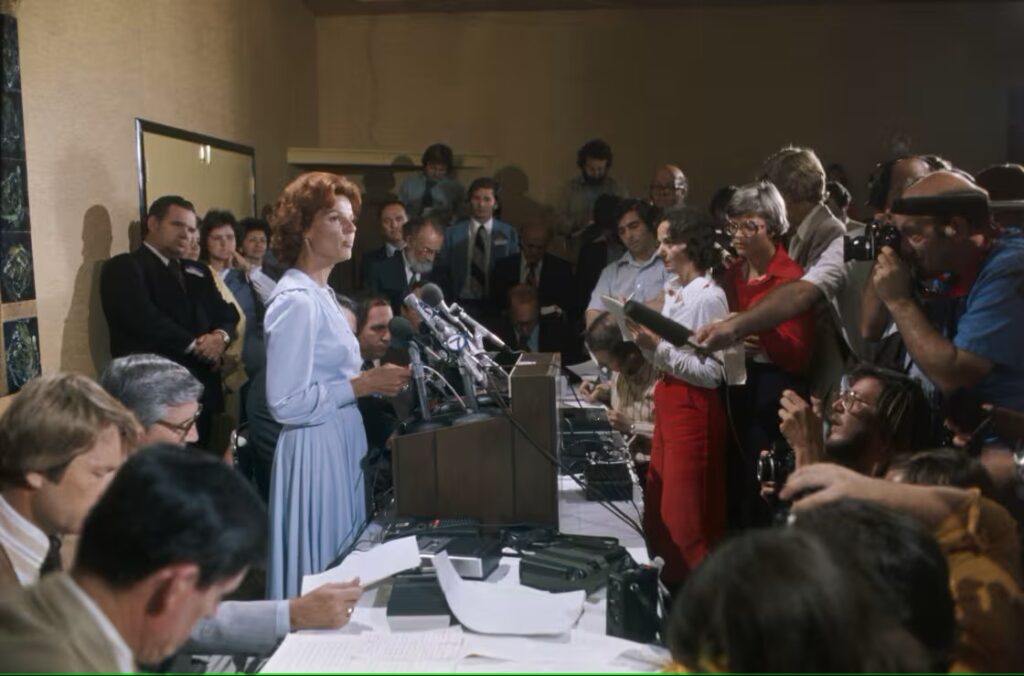
Despite objections by Bryant and other dissenters, voted to add the provision prohibiting discrimination against homosexuals. The majority of the commission passed the change in the ordinance. Bryant considered Shack’s actions a personal betrayal. Their friendship was over (Slate).
Though devastated by the vote, Bryant fought back. The next month, she held a press conference to announce a petition drive for a ballot referendum to repeal the new provision. The banner behind her said, “Save our Children from homosexuals” (Slate). This slogan morphed into Bryant’s new political organization, Save Our Children.
Bryant stated in a Save Our Children newsletter, “I don’t hate the homosexuals! But as a mother, I must protect my children from their evil influence” (Bryant).
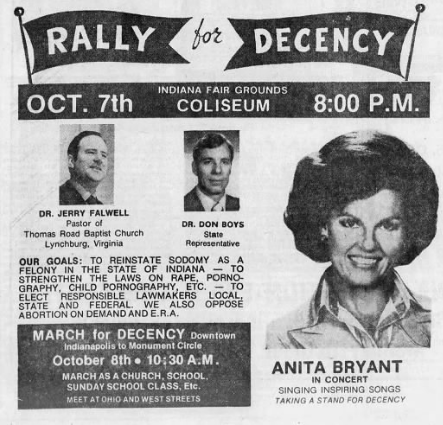
The referendum required 10,000 signatures to get on the June ballot. By March, Save Our Children had gathered 60,000 signatures. Bryant’s campaign succeeded spectacularly. The county reversed the ordinance by 69% (Slate).
In a joyful statement to the press, Bryant bragged, “The laws of God and the cultural values of man have been vindicated. The people of Dade County, the normal majority, have said enough, enough, enough” (Slate).
Gay rights advocates refused to back down. If anything, Bryant inspired them. Jean O’Leary and Bruce Voelle, co-executive directors of the National Gay Task Force, sent a letter to the New York Times which wryly observed, “Anita Bryant and her Save Our Children Inc. are doing the 20 million lesbians and gay men in America an enormous favor: They are focusing for the public the nature of the prejudice and discrimination we face.”
The NY Times letter was prophetic. Gay organizations and their supporters intensified their efforts. They focused their attacks on Anita Bryant as the flagbearer of the anti-gay movement. According to the biography posted on her “Anita Bryant Ministries International” website, “[Anita] was blacklisted and made the butt of jokes on the radio and TV. She and her family received daily death and kidnapping threats, crank phone calls, bomb scares, and hate mail, with human dung and voodoo dolls.”
While her own website might not be the most unbiased source of information concerning Bryant’s personal life, it’s undeniable that mocking her became a cause célèbre in an entertainment industry that had once been her oyster. Every Johnny Carson monologue had a joke about Anita Bryant and her loopy anti-gay crusade. Pro-gay protests at her concert venues and speaking engagements led to decreased bookings. An offer to sponsor a weekly variety show was rescinded (Endres).
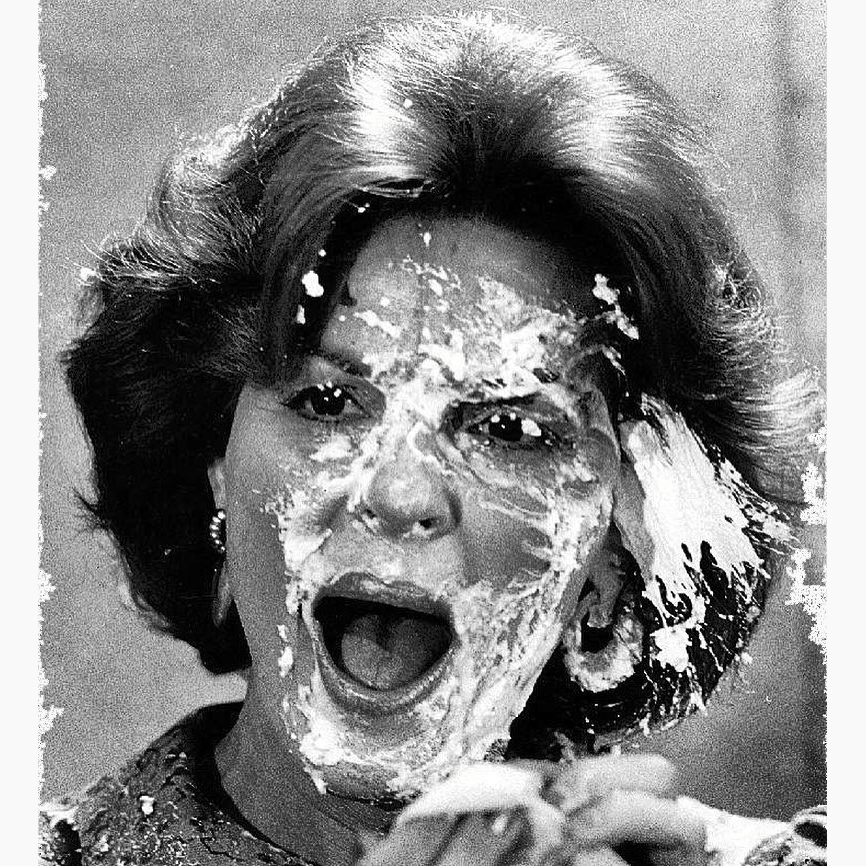
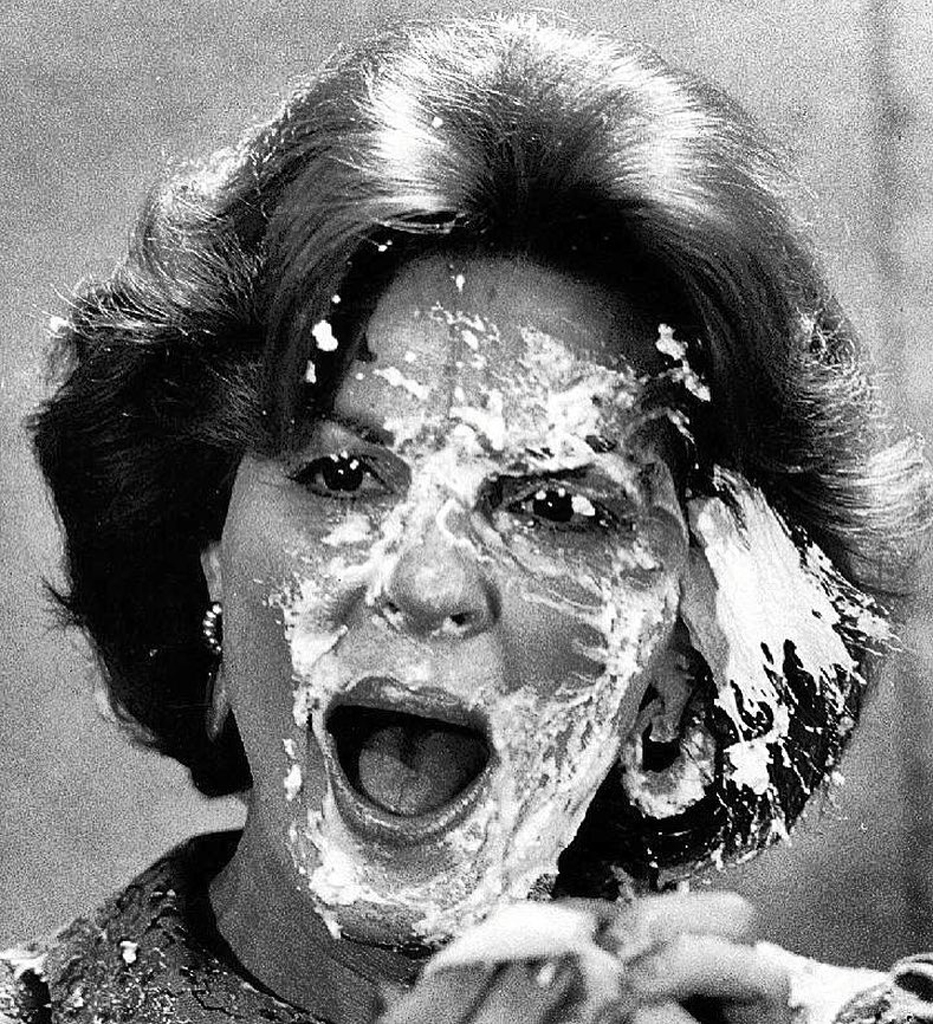
During one of Bryant’s press conferences, a gay protester hit her in the face with a cream pie. Shaken by the incident, Bryant still managed to joke, “At least it was a fruit pie” (Endres). The phrase is out of fashion now, but in those days, calling a gay man a “fruit” was a derogatory homophobic slur.
In a 2021 interview, Bryant’s former friend Ruth Shank commented, “[Philosopher] Eric Hoffer [said that movements] can exist very well without a God, but they can’t exist without a devil. Anita Bryant became the devil of the gay rights movement, and I think that really helped the movement organize and pull together” (Slate).
The cost to Bryant’s professional career and personal life was monumental. By 1980, the Florida Citrus Commission grew weary of the controversy and declined to renew her contract. The loss of income and the constant political havoc put a strain on her marriage to husband Bob Green, leading them to divorce later that year. This shocked and enraged her conservative Christian allies who considered divorce as much a sin against God as homosexuality. In an ironic funhouse mirror reflection of the tactics employed by gay rights advocates, the Christian coalition also boycotted Bryant (Rothaus).
More troubles followed as Bryant’s finances continued to degrade. She eventually filed for bankruptcy—twice. When Bryant tried to raise money by touring the country to promote anti-gay legislation, opposition spread across the political spectrum. Even stalwart conservatives Gerald Ford and Ronald Reagan found her views to be too unpopular and would not lend their support (Endres).
By 1980, Bryant “retired” from her career. In truth, there was little career left for her to retire from.
This certainly wasn’t the first example of someone being ostracized for their public persona. Many historical figures from Galileo to Marie Antoinette suffered that misfortune. What was different about Bryant’s fall from grace was how a relatively new medium, television, accelerated the process. It took only three years for Bryant to go from being one of the most successful entertainers in the country to a pariah. This may seem slow in our modern social media-driven society, but in the late 1970s, this was blazingly fast.
This begs the question: Did Anita Bryant get what she deserved? Many would assert that she did. After all, Bryant frequently claimed that she didn’t hate gay people while referring to them as “evil.” Her behavior was disingenuous at best and certainly irresponsible. It’s understandable if many regard her public demise as a classic case of karma in action.
Another reason to hold Bryant responsible is how today’s culture wars have amplified the tactics she pioneered. It isn’t enough to disagree with a message; one must also attack the messenger. There are no limits to the vitriol, including personal attacks. For some, threatening the lives of the target and their family is perfectly acceptable.
Yet, if we want to judge the fairness of the tactics Bryant used, it’s equally important to examine the methods used by her detractors. Each side tried to destroy the other side’s ability to have a career.
If it’s okay for the other side to do it, is it okay for our side to do it? Is it okay for any side to do it?
The Founding Fathers considered the right to free speech so important that they included it in the very first amendment of the Constitution. A vital aspect of the First Amendment is that it not only applies to what we want to hear—it also applies to what we don’t want to hear. This is how opposing viewpoints, no matter how unpopular, get a chance to be heard. Instead of everyone demonizing their enemies, the Founding Fathers wanted to encourage compromise and understanding. They hoped that dialogue would replace violence as a catalyst for change.
The Internet and social media could evolve into such a catalyst. But if cancel culture continues to dominate the airwaves to the exclusion of all else, it seems unlikely.
The end of Bryant’s influence didn’t end opposition to gay rights. A legion of other organizations happily took up her banner and carry it to this day. The efforts by Florida Governor Ron DeSantis to remove references to homosexuality in school materials (the so-called “Don’t Say Gay” bills) may not sound as extreme as the tactics Bryant employed. Still, Bryant laid the foundation for those initiatives (Boston).
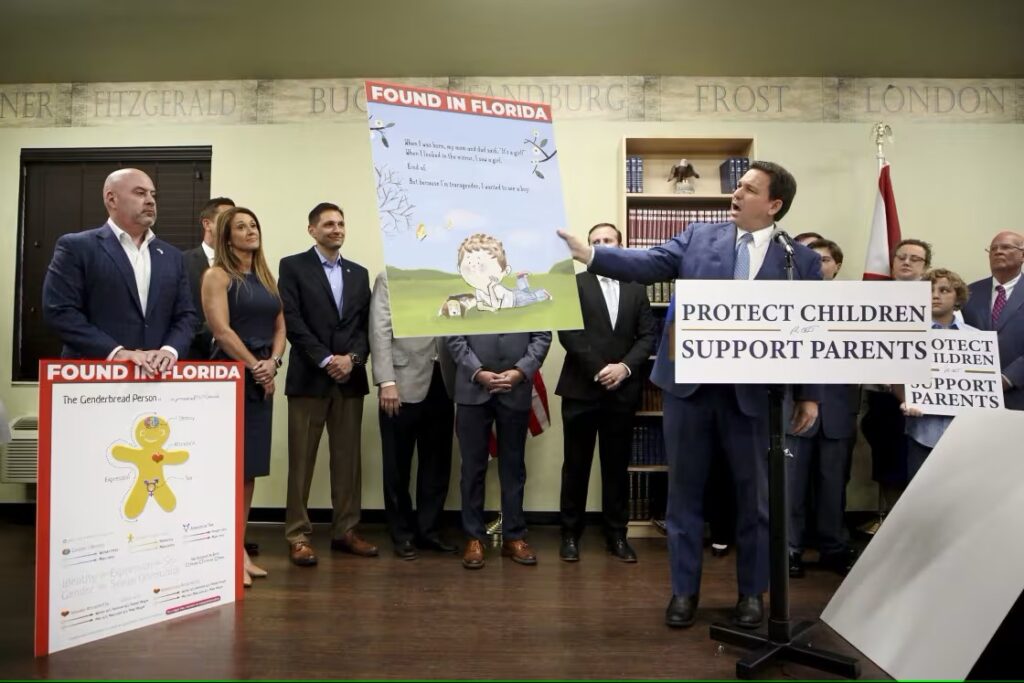
On the gay rights side of the issue, there has been some progress since Bryant’s errant crusade. The Florida anti-discrimination ordinance was revised in 1998 to codify protection against gay discrimination (Boston). The ban on gays in the military was eventually lifted. Gay adoption and same-sex marriage are now legal across the country—at least for now.
What about the question posed at the beginning of this essay? Is the Internet required to support cancel culture?
The answer is that cancel culture existed long before the creation of the Internet. All cancel culture needs to work is a method of communication fast enough for criticism to outrun information.
All you really need is a television set.
As for Anita Bryant, she eventually retired to her home state of Oklahoma, mostly forgotten by the public that once adored her. She is 84 years old.
Anita Bryant died of cancer on December 16, 2024, two days after I submitted this essay to my English composition class.
Works Cited
“Anita Bryant’s War on Gay Rights.” One Year: 1977, 8 July 2021. Slate, slate.com/transcripts/cWNjZ0ZuOU1TdjBUR0p3MHVIbVdvZG9MNWxNNHlvdXZCd2JaNXhIM053bz0=. Accessed 11 Dec. 2024.
Boston, Rob. “Out of tune: Nearly 50 years ago, a pop singer led an anti-LGBTQ+ crusade in Florida.” Americans United for Separation of Church and State, 1 June 2024, www.au.org/the-latest/church-and-state/articles/out-of-tune-nearly-50-years-ago-a-pop-singer-led-an-anti-lgbtq-crusade-in-florida-the-strategies-she-used-remain-part-of-the-christian-nationalist-playbook-today. Accessed 11 Dec. 2024.
Bryant, Anita. “When the Homosexuals Burn the Holy Bible in Public…How Can I Stand By Silently.” Sexual Science, Sexual Politics, compiled by Ellen Herman. Department of History, University of Oregon, pages.uoregon.edu/eherman/teaching/texts/Bryant%20When%20the%20Homosexuals.pdf. Accessed 11 Dec. 2024.
Buckwald, Art. “When You Think of Anita Bryant.” The Washington Post, 23 June 1977, wapo.st/49xiYGK. Accessed 11 Dec. 2024.
Douthat, Ross. “10 Theses About Cancel Culture.” The New York Times, 12 July 2020, www.nytimes.com/2020/07/14/opinion/cancel-culture-.html?smid=nytcore-ios-share&referringSource=articleShare. Accessed 10 Dec. 2024.
Endres, Nikolai. Weblog post. glbtq, 2009, www.glbtqarchive.com/ssh/bryant_anita_S.pdf. Accessed 11 Dec. 2024.